Environmentally friendly solutions in the printing industry – a green future is no longer an option, but a business advantage
Sustainable labeling is now a business advantage: FSC paper and biodegradable film.
Environmentally friendly solutions in the printing industry – a green future is no longer an option, but a business advantage
The modern printing industry has undergone tremendous change in recent years. Whereas the focus used to be on speed, cost efficiency, and print quality, environmental awareness, sustainable raw materials, and recyclability have now become equally important considerations.
A growing number of businesses, manufacturers, and consumers are seeking solutions that offer both premium visual appeal and environmental responsibility. The good news is that the printing industry is greener than ever before, and there are many options available.
In this article, we present solutions that enable printed products to be high-quality, durable, and sustainable at the same time.
Why has sustainability become a key issue in the printing industry?
The answer is simple: packaging and labeling are often the first waste that consumers encounter. Brands can no longer afford to ignore environmental protection:
- More and more countries are introducing legal requirements for packaging.
- Consumers are more aware and better informed.
- It is also a PR and branding advantage for companies.
- Sustainable labeling is also more cost-effective in many cases.
Modern printing companies no longer just handle paper and ink, but also responsibility.
Environmentally friendly materials in labeling and printing
1. FSC® certified paper – a guarantee of responsible forest management
FSC (Forest Stewardship Council®) certification is one of the most widely accepted and stringent international standards for sustainable paper production.
What does this mean?
- The raw material for the paper comes from forests where controlled and sustainable harvesting practices are in place.
- There is no illegal logging.
- The wood is traceable.
- Ensures the maintenance of the ecosystem.
FSC papers are available in a variety of finishes:
- matt,
- bright,
- structured,
- premium design papers,
- natural or kraft surfaces.
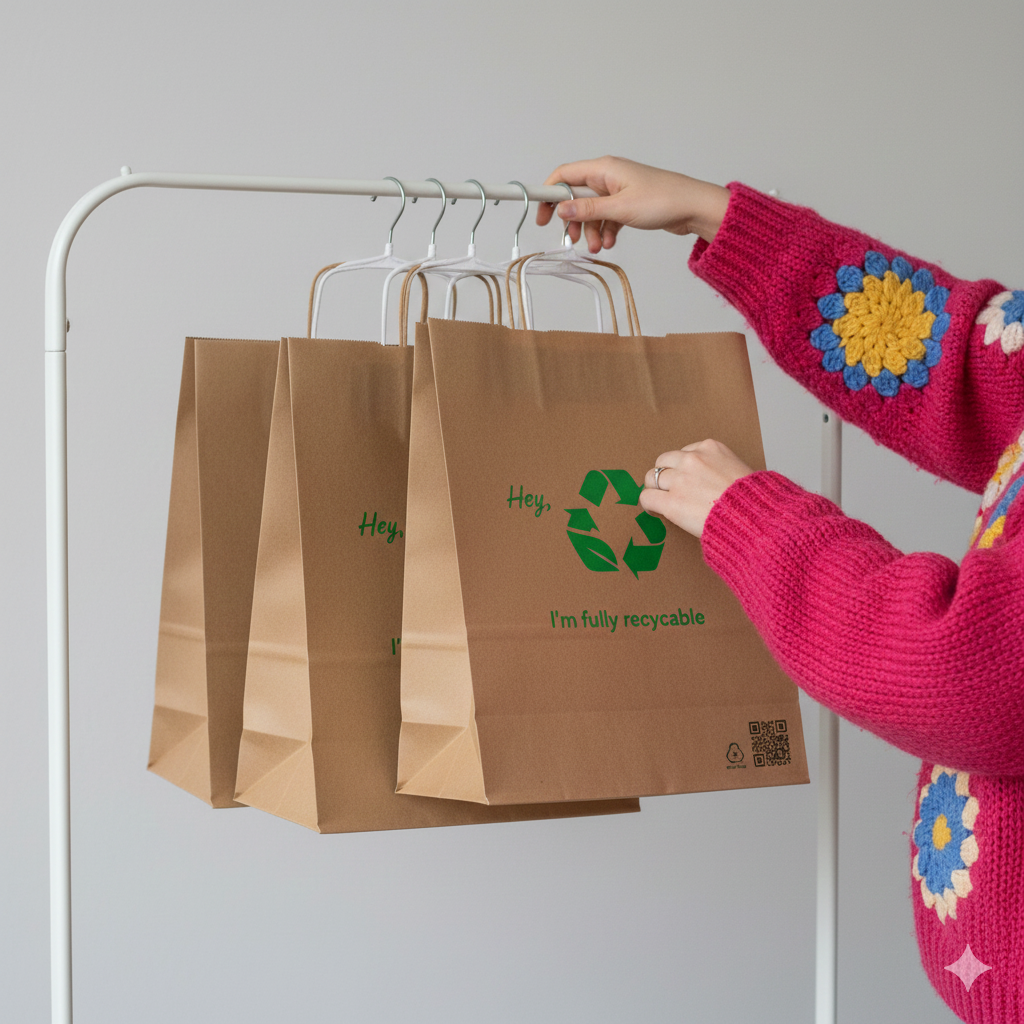
FSC paper is not only an environmentally conscious choice—it is also a communication value for brands that customers can perceive.
2. Recyclable plastic raw materials (PP, PE, PET)
Plastic remains indispensable in many industries, but today there are specifically environmentally friendly alternatives:
Recyclable PP (polypropylene)
- fully recyclable,
- durable,
- waterproof,
- also available with food safety certification.
Recyclable PE (polyethylene)
- flexible, durable,
- also suitable for flexible surfaces,
- Recommended for most industrial packaging applications.
PET, RPET plastics
- high strength,
- made from up to 100% recycled materials.
- quickly and easily recycled.
The good news is that modern eco-friendly plastics are in no way inferior to their traditional counterparts in terms of quality.
3. Biodegradable and compostable materials
These are the fastest growing solutions in the packaging industry.
Available, for example:
- cellulose-based films,
- PLA raw materials (corn-based biopolymer),
- degradable paper or textile fiber labels.
These decompose naturally without leaving behind any harmful substances.
Environmentally friendly adhesives and coatings
Sustainability depends not only on the raw material, but also on post-treatment.
Now available:
- water-based adhesives,
- solvent-free coatings,
- environmentally friendly laminating and foiling,
- recycled adhesive labels.
In addition to their high quality, they are durable, suitable for industrial use, and ensure food safety.
Green technologies in printing
Modern printing machines consume less energy, produce less waste, and operate with optimized ink or toner usage.
Environmentally friendly technologies:
- digital printing
- LED-UV drying
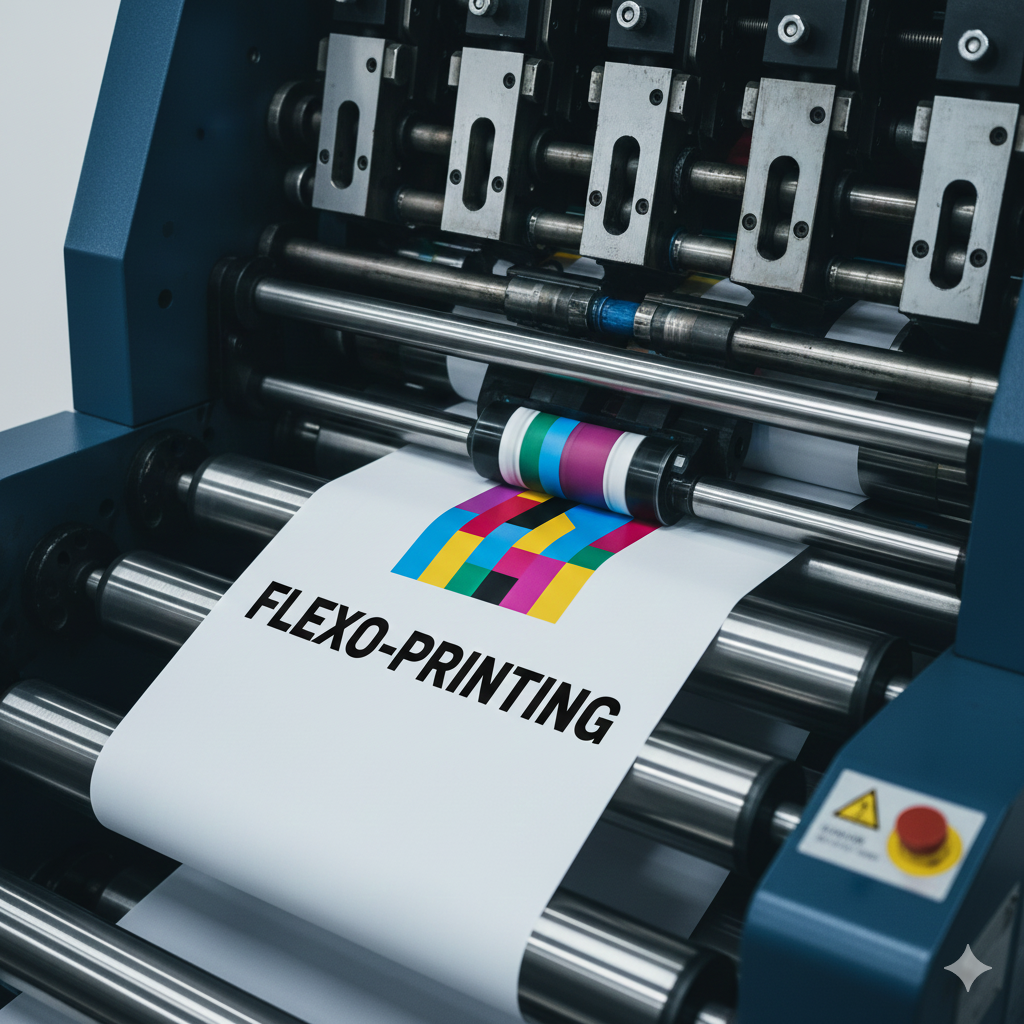
- energy-efficient flexo
- solvent-free paints
- water-based paints
These produce fewer harmful emissions and are much more energy efficient.
Waste reduction and recycling
In a modern printing house:
- less waste is generated,
- waste can be recycled,
- the product can be reprinted,
- They use environmentally friendly manufacturing processes.
Digital technologies, for example, produce almost no waste and do not require tools—this alone reduces their ecological footprint.
Why is sustainable labeling also beneficial from a business perspective?
Because today, consumers are also looking for:
- environmentally friendly packaging,
- recyclable label,
- sustainable raw materials,
- ethical manufacturing.
For brands, this is not only a responsibility—it is also a marketing advantage.
Sustainable labeling:
- increases customer confidence,
- gives a premium feel,
- strengthens brand value,
- and is often more cost-effective in the long term.
How to choose an environmentally friendly solution?
Some points to consider:
✔ Recyclable or biodegradable raw materials
✔ FSC certification
✔ Plastic-free alternatives where possible
✔ Sustainable manufacturing processes
✔ Appropriate adhesives and coatings
✔ Industry-appropriate durability
Environmentally friendly labeling is not a compromise—it's a step forward.