Flexographic printing
Our company manufactures self-adhesive labels and packaging materials in roll form.
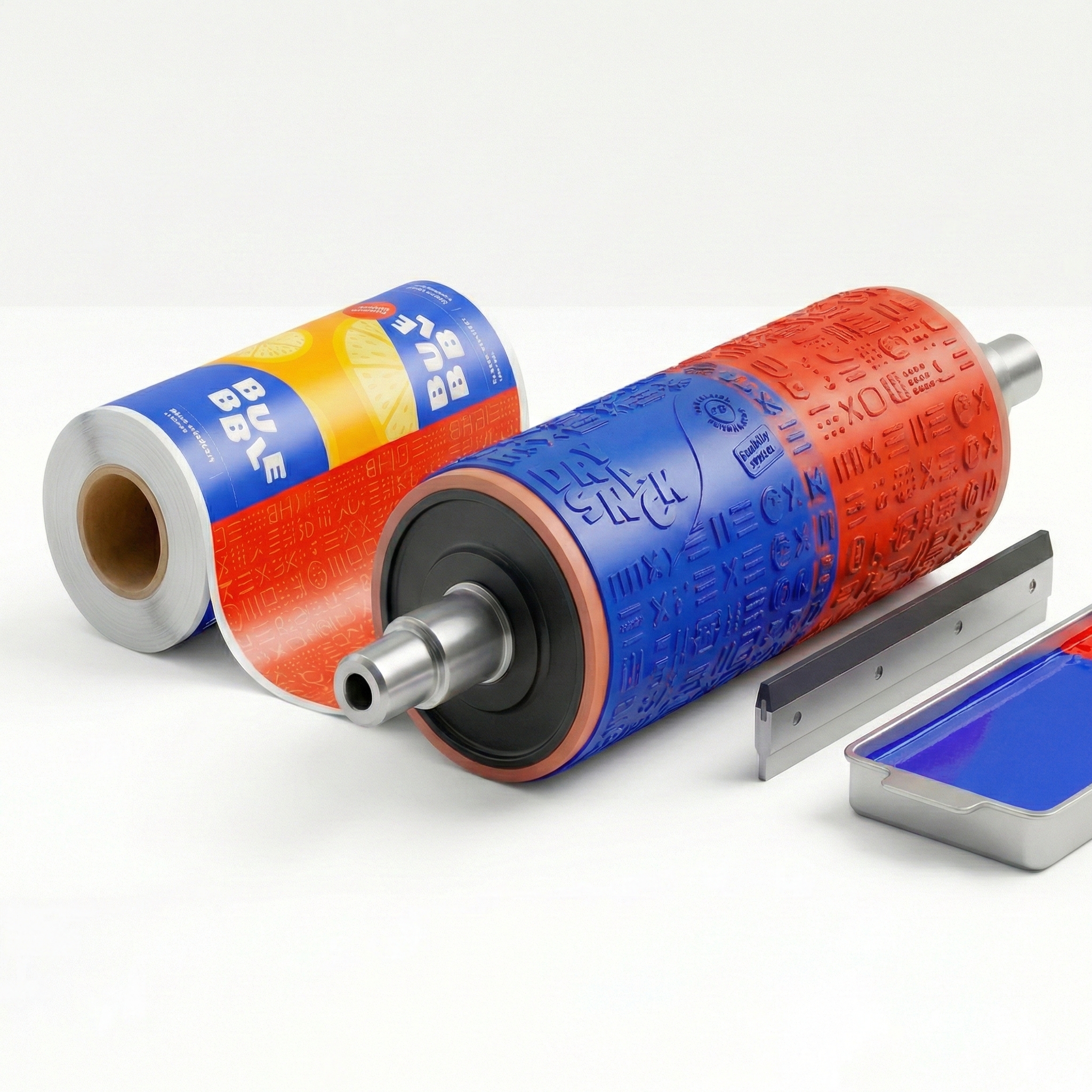
Advantages of flexographic printing:
Flexography is a technology that uses flexible printing forms and low-viscosity inks. In this process, the printing form is flexible and printing is done from a rotary, i.e., a roll. Flexographic printing uses photopolymer printing plates that are wound around rotating cylinders. In the past, these printing forms were mainly made of rubber, but today photopolymer materials dominate.
Flexo printing has numerous advantages:
Diversity of materials
It adapts flexibly to different materials such as thin film, paper, cardboard, metal, and plastic.
High speed
Ideal for long print runs.
High-quality output
Short setup time with minimal waste.
Cost-effective
Printing, painting, laminating, and cutting can be done in one go.
However, it is important to remember that flexographic printing also has its limitations:
Printing plate
Flexographic printing plates are relatively expensive, but with proper care, they can withstand millions of prints.
Version change
Modifying versions is time-consuming.
What does flexo printing include?
- Production on various materials (thin film, paper, cardboard, metal, plastic)
- Fast production process for long print runs
- Short setup time with minimal waste
- Printing, painting, laminating, and cutting in one go
What materials are suitable for flexographic printing?
Thin film, paper, cardboard, metal, and plastic.
What inks can be used in flexo technology?
Water-based inks, solvent-based inks, and energy-generating inks.
When is it worth choosing flexographic printing?
For long print runs and high-speed production.
What quality can be achieved with flexographic printing?
High-quality output with short setup times and minimal waste.
Are there any limitations to this technology?
The price of printing forms is relatively high, and modifying versions is time-consuming.